
Guides · Guides · 7 min read
Strawberry Legs: Causes and When Laser Can Help
By the Perfect 5 Clinic team · Updated September 2026
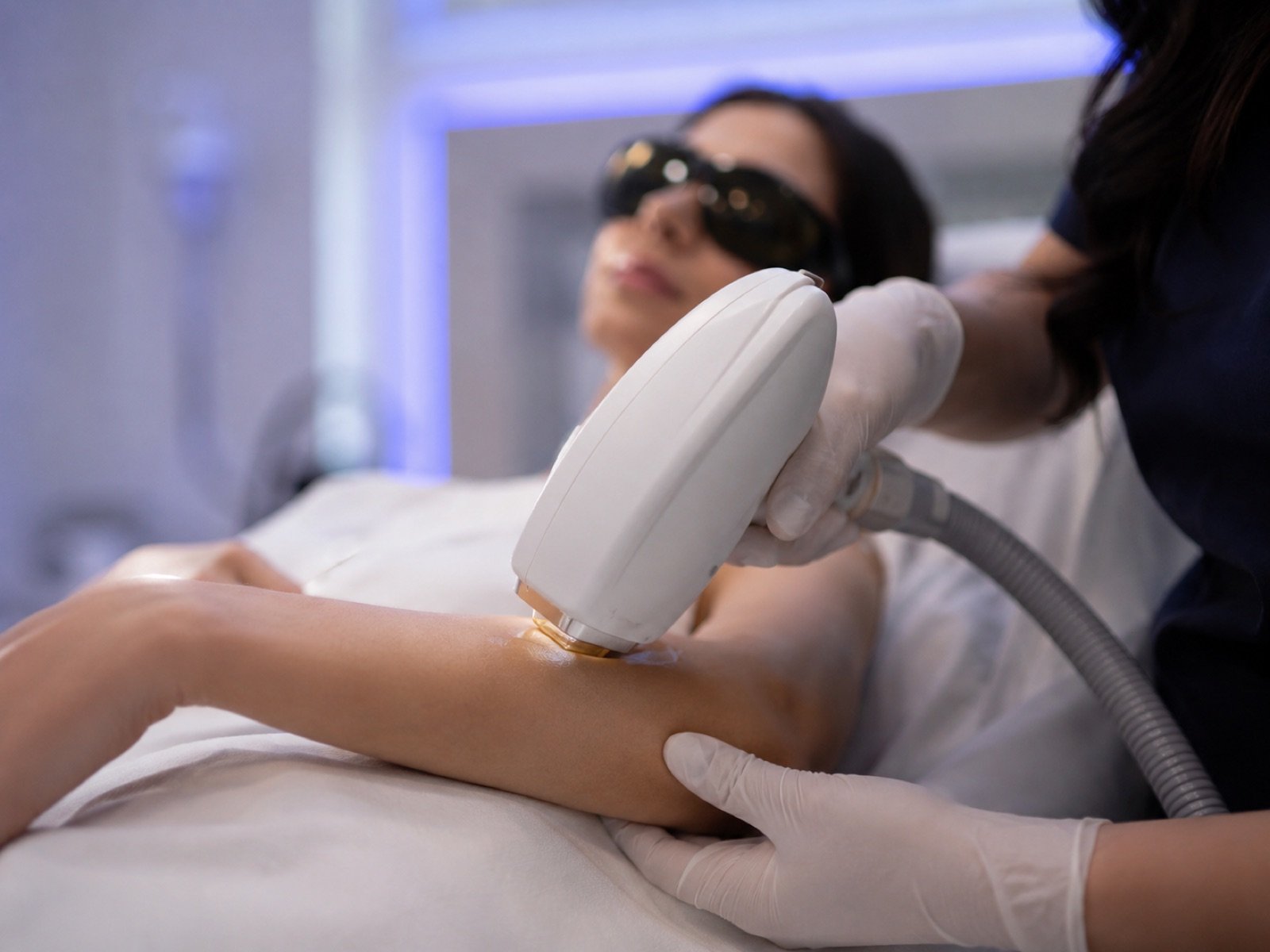
Strawberry legs is not a medical diagnosis. It is a nickname for small dark dots on the legs that look a bit like the seeds on a strawberry. The dots come from a handful of things, and most people have more than one: hair stubble sitting just under the skin, open or clogged follicles, ingrown hairs, inflamed hair follicles (folliculitis), keratosis pilaris, and the dark marks that old bumps leave behind.
Can laser hair removal help strawberry legs? Sometimes, yes. If your dots are mostly dark, thick hair showing through the skin, or bumps from hairs that keep growing inwards after shaving, a course of laser can often reduce them, because it thins out the hair behind them. Results vary from person to person. If the dots are old pigment marks, an active infection or plain dry, rough skin, laser on its own won’t fix them. So the first job is working out which kind you have.
What actually causes the dark dots?
Look closely, ideally in daylight, a day or two after shaving. You may spot more than one of these.
The usual causes
- Hair under the skin. Coarse, dark hair shows through as a dark dot even right after a close shave. This is very common, especially where dark hair sits against lighter skin. The dots are flat and there is often a tiny hair visible in the centre.
- Open or clogged follicles. Every hair grows out of a small opening. Oil, sweat and dead skin can collect there, and when that plug meets air it darkens, much like a blackhead. Sweat, heavy body lotions and tight clothing can add to it.
- Ingrown hairs. After shaving, epilating or plucking, a sharp hair tip can curl back or grow sideways into the skin. You get a raised, sometimes itchy bump, and you may see the hair trapped under the surface.
- Folliculitis. This is inflammation of the follicles, often red or pus-tipped bumps that can be sore or itchy. Friction, sweat, a blunt razor or shared razors can set it off. Bacteria cause many cases, but some are fungal, which matters because they need different treatment.
- Keratosis pilaris. Rough, sandpaper-like little bumps, often on the thighs and upper arms, caused by keratin plugging the follicles. It tends to run in families, is common in people with dry skin or eczema, and often feels worse in dry winter months.
- Marks left behind. On brown skin, any bump that gets inflamed or picked can leave a dark spot (post-inflammatory hyperpigmentation). These spots stay long after the bump has gone and are often the most stubborn part of strawberry legs.
A quick self-check: flat dots with a tiny hair in the middle are usually hair under the skin. Flat brown spots with no hair and no bump tend to be leftover marks, and dark pinpoints that look like blackheads are clogged follicles. A raised bump with a hair trapped inside is likely an ingrown. If the bumps are red, tender or have pus, think folliculitis. Rough, goosebump-like skin is usually keratosis pilaris.
When laser can help
Laser hair removal works by sending light into the pigment in the hair. The light turns to heat and damages the follicle so hair grows back finer and sparser over a course of sessions. It reduces hair over the long term, but it can’t promise that hair never comes back. Hair grows in cycles, so you need several sessions, usually several weeks apart (the gap is longer for legs than for the face), and some people need occasional top-up sessions later.
Laser is most likely to help if
- Your dots are mainly dark, coarse hair showing through the skin. Less hair and finer hair means fewer visible dots.
- Your dots are partly hairs that keep growing back into the skin on your legs after shaving. With less hair, and finer hair, fewer of them get trapped.
- Shaving itself is irritating your follicles. Once hair growth slows, the constant cycle of razor friction and regrowth eases off.
- Your leg hair is dark enough for the laser to find. Laser needs pigment in the hair to work.
With keratosis pilaris, the picture is less clear. A few small studies have reported smoother skin after hair was reduced with laser, but the evidence is limited. Laser is not a standard treatment for keratosis pilaris on its own. If you have both keratosis pilaris and heavy hair growth, it is worth talking through what laser might realistically change.
When laser won’t help, or should wait
“Laser hair removal will clear the dark spots on my legs.”
Laser hair removal targets hair, not the brown marks left by old bumps. Those marks may fade slowly once new bumps stop forming, but they need time, sun protection and sometimes separate pigmentation care.
“If my legs have bumps, laser is the fastest fix.”
Red, sore or pus-filled bumps should be checked and treated by a doctor first. Laser is not done over inflamed or infected skin, and fungal folliculitis in particular needs its own treatment.
“Laser will work on any leg hair.”
Grey, white, blonde, red or very fine hair has too little pigment for laser to work well. If most of your leg hair is like that, laser is unlikely to change your dots much.
“Dots from clogged pores need laser.”
Plugged follicles from oil and dead skin often improve with gentle exfoliation and moisturising alone. Laser is only part of the answer if hair is also involved.
Laser also has its own side effects. Temporary redness, swelling around the follicles and small bumps are common for a day or two. Less often, and more so on brown or recently tanned skin, it can cause blisters or changes in skin colour. Rarely, it can burn or scar, or trigger more hair growth nearby. That’s why the settings need to suit your skin type, and why a test patch on a small area before a full leg session is sensible.
Tell the clinic if you are pregnant, take acne or other medicines that make skin sun-sensitive, have a fresh tan or self-tan, scar easily, or often get cold sores or skin infections in the area. Laser may need to wait.
When to see a doctor
Most strawberry legs are a cosmetic nuisance, not a health problem. But some leg bumps need proper medical attention rather than home care or a hair removal plan. Don’t wait these out.
- Bumps that are painful, filled with pus, spreading, or come with fever.
- Itchy, ring-shaped or scaly patches, which can be a fungal infection.
- Bumps that keep coming back despite good shaving habits and home care.
- Any bumps if you have diabetes or a condition or medicine that weakens immunity.
- A spot or mole that bleeds, grows or changes colour or shape.
What you can do at home first
If none of the warning signs above apply, a few habits help most people. Give them six to eight weeks before judging, because skin takes time to settle. If your bumps are painful, pus-filled or spreading, or you have a fever, skip the wait and see a doctor.
Everyday care for strawberry legs
- 1Shave after a warm bath or shower, with a clean, sharp razor, in the direction the hair grows. Don’t dry-shave.
- 2Don’t share razors, and replace blades often.
- 3Use a gentle chemical exfoliant, such as a body lotion with salicylic acid, lactic acid or urea, a few times a week. Don’t apply it straight after shaving or on sore or broken skin, and stop if it stings or reddens. If you’re pregnant, check with a doctor before using salicylic acid on large areas.
- 4Skip harsh scrubs and loofahs that you rub hard; friction can darken brown skin further.
- 5Moisturise daily, especially in winter if you have rough, bumpy skin.
- 6Change out of sweaty gym clothes soon, and choose looser fabrics on hot, sweaty days.
- 7Don’t pick or squeeze bumps or dig out trapped hairs. That is how most of the dark marks start.
- 8Use sunscreen on legs that are exposed to the sun, so existing marks don’t get darker.
- 9Avoid over-the-counter mixed creams that combine a steroid with antifungal or antibiotic ingredients unless a doctor has prescribed them. They can make some skin problems worse.
What to expect if you choose laser
At your first visit, someone will look at your legs in good light and ask about your shaving routine, past bumps, skin conditions and medicines. If laser suits your hair and skin, you’ll be told roughly how many sessions to expect, how far apart, and what to avoid in between. Don’t wax, pluck or epilate, since laser needs the root in place; shaving between sessions is fine. Avoid sun tanning and self-tanners before and after sessions, and use sunscreen on treated legs. If the problem is mostly pigment or infection, you should be told that laser isn’t the answer and pointed to a doctor.
Be careful with before-and-after photos you find online. Lighting, a fresh shave and the angle of the camera can make a huge difference, and nobody’s legs respond exactly like someone else’s. Your own progress over the course is a better guide.
Everyone’s skin is different, and this guide can’t replace an in-person check. If you’re not sure what your dots are, get them looked at before you spend money on any treatment. You can book a leg assessment at our Noida Sector 50, Lajpat Nagar (south Delhi) or Indirapuram (Ghaziabad) clinic. We’ll check whether laser suits your hair and skin, and tell you if your bumps need a doctor first.
Quick answers
Does laser hair removal get rid of strawberry legs?
It can help when the dots are caused by dark hair under the skin or by hairs that keep getting trapped after shaving, because laser makes leg hair finer and sparser over several sessions. It does not remove brown marks left by old bumps, and it won’t fix folliculitis, clogged follicles or dry skin on its own. Results vary, so get your legs checked before you start.
Will one laser session clear strawberry legs?
No. Leg hair is treated over several sessions, usually several weeks apart, because hair grows in cycles, and some people need occasional top-ups later. How much your dots improve depends on what is causing them, your hair colour and thickness, and your skin type.
Can strawberry legs be treated at home?
Often they can improve. Shave after a warm shower with a sharp razor, use a gentle exfoliating lotion with salicylic acid, lactic acid or urea (not on freshly shaved or sore skin), moisturise, wear looser clothes on hot, sweaty days and avoid picking bumps. Give it six to eight weeks. If your bumps are painful, pus-filled or spreading, or you have a fever, don’t wait; see a doctor. If the dots are mainly thick hair showing through, home care has limits.
Is strawberry legs the same as keratosis pilaris?
Not exactly. Keratosis pilaris is one possible cause: rough, dry bumps from keratin plugging the follicles. Strawberry legs is a broader nickname that also covers hair under the skin, ingrown hairs, folliculitis and dark marks left behind.
Can laser make strawberry legs worse?
Laser can cause temporary redness and small bumps around the follicles for a day or two. Less often, especially on brown or tanned skin, it can cause blisters or colour changes, and rarely burns, scarring or more hair growth nearby. That is why settings should suit your skin and a test patch is sensible. It should not be done over infected or inflamed skin, and may need to wait if you are pregnant or on sun-sensitising medicines.
When should I see a doctor about bumps on my legs?
See a doctor if the bumps are painful, pus-filled or spreading, come with fever, look like itchy ring-shaped patches, keep returning despite good care, or if you have diabetes or low immunity. Any spot that bleeds or changes should also be checked.
Book laser hair removal at a clinic near you
This guide is general information, not medical advice; individual results and suitability vary. For advice about your own skin or hair, book a consultation at any Perfect 5 Clinic.